 TR
TR EN
EN RU
RUContact Us
0216 550 89 97

Drainage pipes are the cornerstone of water management. Rainwater, surface water, groundwater and even controlled industrial wastewater; They are responsible for collecting, transporting and delivering to appropriate discharge points (streams, lakes, sewers, infiltration areas, etc.) in a safe and efficient manner, without causing unwanted accumulations, floods, landslides or structural damage. Its usage areas are extremely wide:
- Agriculture: Field drainage, greenhouses, gardens.
- Urbanization and Transportation: Roadside drainage, highway under-drainage systems, intersections, tracks.
- Construction: Building foundation and environmental drainage (peripheral drainage), roof rainwater downpipes, terrace and balcony drainage, parking lots.
- Sports Fields: Football fields, tennis courts, golf courses, athletics tracks.
- Industry: Factory sites, storage areas, treatment facilities.
- Landscaping: Parks, gardens, green roofs.
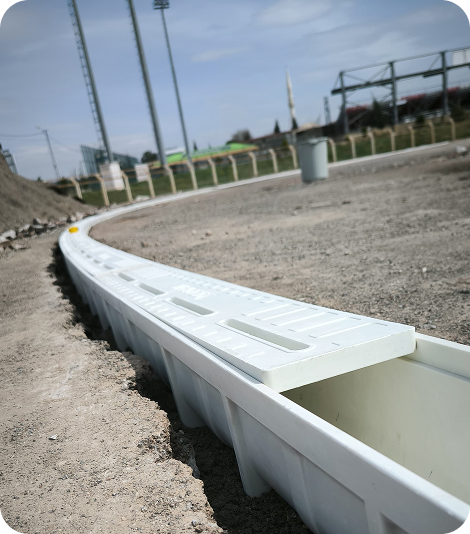
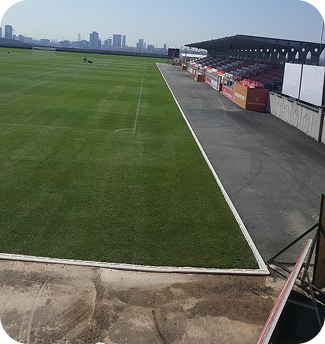
Application Examples, Kahramanmaraş Sports Complex (Saim Çotur Facilities)
An effective drainage system not only prevents discomfort, but also:
1. Extends the Life of the Building: It increases the durability of buildings by reducing hydrostatic pressure and humidity in the foundations.
2. Maintains Soil Fertility: It prevents excessive water from rotting plant roots and increasing soil salinity in agricultural lands.
3. Controls Erosion: It reduces the uncontrolled power and speed of surface flow.
4. Protects the Environment and Public Health: It helps prevent stagnant water (a mosquito breeding ground) and leaks.
- Superior Mechanical Strength:
- Pressure Resistance: Structural integrity to meet the soil load, vehicle traffic (especially in under-road applications) or pressure resulting from deep pavement.
- Impact Strength: Resistance to impacts that may occur during transportation, laying and excavation.
- Flexibility / Rigidity Balance: Ability to adapt to soil movements (settlement, frost heave) (flexibility) or not deform under load (rigidity) - the choice is critical depending on the application area.
- High Chemical and Environmental Resistance:
- Corrosion Resistance: Resistance to salts, acids, alkalis, organic substances and microorganisms found in the soil.
- UV Resistance: Important for pipes stored outdoors or partially exposed to sunlight.
- Resistance to Temperature Changes: No cracking or deterioration during freeze-thaw cycles.
- Optimal Hydraulic Performance:
- Smooth Inner Surface: It increases efficiency by allowing water to flow with minimum friction, reducing the risk of clogging and the need for maintenance.
- Sufficient Diameter and Flow Capacity: Choosing the right diameter to carry the maximum expected water flow rate.
- Long Life and Low Maintenance: Providing trouble-free service for decades and requiring minimum maintenance.
- Ease of Assembly and Economy:
- Lightness: Reduces transportation and laying costs (especially plastic pipes).
- Easy Combinability:Reliable and fast connection systems such as sleeve, gasketed socket, welding (fusion).
- Long Standard Lengths:This means fewer connection points, reducing the risk of potential leaks and blockages and speeding up installation.
- Environmentally Friendly:It is produced from recyclable materials and does not release harmful substances into the environment throughout its production and lifetime.
Drainage Pipe Types and Material Technology:
The choice depends on the budget, technical requirements (pressure, depth, chemical exposure) and environmental conditions of the project:
1. PVC (Polyvinyl Chloride) Drainage Pipes:
- Features:Lightweight, excellent chemical resistance (acids, alkalis, salts), smooth inner surface (high flow efficiency), easy to cut and join (solvent welding, gasketed socket), UV stabilizer types are available. It offers economical solutions.
- Pressure Classes: Resistance to soil load and traffic load is classified according to SN (Nominal Strength) classes (such as SN2, SN4, SN8).
- Areas of Use: Building foundation drainage (with/without perforation), landscape drainage, light and medium load roadside drainage, roof downpipes, agricultural drainage.
2. PP (Polypropylene) Drainage Pipes:
- Features: Higher impact and tensile strength than PVC, superior chemical resistance, especially against acids, and better adapts to ground movements such as frost heaving thanks to its flexible structure. High temperature resistance is good. There are types such as PP-B (Block Copolymer) and PP-R (Random Copolymer). It is usually available as a straight pipe or with a geotextile sheath (filter).
- Areas of Use: Geotextile sheathed versions are often preferred in deep drainages, chemical waste drainage (laboratories, industry), regions with high frost risk, agricultural drainage.
3. PE (Polyethylene) Drainage Pipes:
- Features: High flexibility and impact resistance, excellent chemical resistance, maintains its performance even at very low temperatures (up to -40°C). HDPE (High Density PE) is the most common type in drainage. Being weldable (electrofusion, extrusion) is an advantage for leak-proof systems. Perforated and geotextile sheathed (filtered) types are very common.
- Areas of Use: All kinds of superficial and deep drainage, especially those with geotextile sheath, prevent soil loss and provide long-lasting filtration. Ideal for difficult ground conditions and applications requiring high flexibility.
4. Concrete and Reinforced Concrete Drainage Pipes:
- Features: Very high pressure and crushing resistance, full fire resistance, long life (50+ years), high material availability. There are standard straight pipes, sleeved connections or types with special fittings (rubber gasket). Load carrying capacity is increased by placing steel reinforcement in reinforced concrete pipes.
- Disadvantages: Very heavy (special handling and laying equipment required), not as resistant to chemicals (acidic waters) as PVC/PP/PE, rougher inner surface (relatively lower flow efficiency, more prone to sediment accumulation).
- Areas of Use: Main urban drainage lines, under-highway drainages, deep discharge lines with high soil pressure and heavy traffic load. Polymer concrete (resin bonded) pipes are a lighter and more chemical resistant alternative.
5. Ceramic (Clay) Drainage Pipes:
- Properties: All-natural material (clay), very long-lasting (known to last for centuries), chemically neutral (inert), does not affect pH balance.
- Disadvantages: It is fragile (not resistant to impacts), heavy, lengths are limited (means more connections), connections may be poor in terms of water tightness, cost is high compared to modern plastic pipes.
- Areas of Use: Rarely used in historical building restorations, organic agriculture or special ecological projects. Its general industrial use is minimal.
Critical Engineering Considerations for Success in Drainage Systems:
- Project Based Design: Pipe diameter, route and slope should be calculated precisely, taking into account the size of the area to be collected, expected rainfall intensity and duration, ground permeability and topography.
- Filtration and Clogging Prevention:
- Geotextile Sheath: Geotextile fabric with appropriate weight and filtration properties must be wrapped around the perforated pipes. This allows water to pass while preventing fine soil particles from entering the pipe.
- Gravel/Aggregate Filling: In pipe trenches, washed, clean gravel or crushed stone is filled around and on the pipe. This filling both provides filtration and protects the pipe against mechanical impacts and creates a drainage path.
- Optimum Slope: Pipes must be laid with a slope that will allow water to flow at a self-cleaning speed (usually ~0.5% - 2%) despite friction due to gravity. Too low a slope causes clogging, and too high a slope causes erosion and problems with pipe connections.
- Depth and Load Calculations: The soil load (depth) on the pipe and the traffic load, if any, (with formulas in TS, EN, DIN standards) are calculated and the appropriate material (PVC, PE, PP, Concrete) and pressure class (SN Value) are selected.
- Compliance with Standards: Compliance of pipes and fittings with relevant national (TSE) and international (EN, ISO, ASTM) standards is vital for the performance and reliability of the system.
- System Integrity: Correct design and implementation of complementary elements such as collection manholes (manholes), filters, settling basins, control structures and discharge ports.
- Maintenance and Control: In order for the system to have a long life, periodic checks (especially entry points and chimneys) and cleaning (CCTV camera inspection, water pressure cleaning - jetting) should be carried out when necessary.
Result and Project Management:
Drainage pipes and systems are an invisible but indispensable engineering discipline. Wrong material selection, faulty design or poor quality application can lead to very serious and costly problems (foundation cracks, floods, landslides, reduced efficiency, increased maintenance costs).
Therefore, regardless of the scale of the project:
1. Expert Engineering Support: Support should be obtained from experienced civil or environmental engineers for hydraulic calculations and system design.
2. Supply of Quality Materials: Pipes and by-products should be supplied from reliable and certified manufacturers with appropriate standards.
3. Experienced Practitioners: Experienced teams should be employed to ensure that the laying, joining, filtering and filling processes are carried out in accordance with the standards and the project.
Drainage pipes are strategic elements of the infrastructure that preserve the value and lifespan of the investment and operate quietly for decades when selected and applied correctly. It should not be forgotten that controlling water is the most effective way to protect the environment and investments.
Contact us directly: info@sfsmuhendislik.com